
Plinko Casino Australia: Games, Risks and Rules
 Available in AU
Understand the slot mechanics, operator checks, real-money conditions, demo formats and limits of claims based on scripts or reviews.
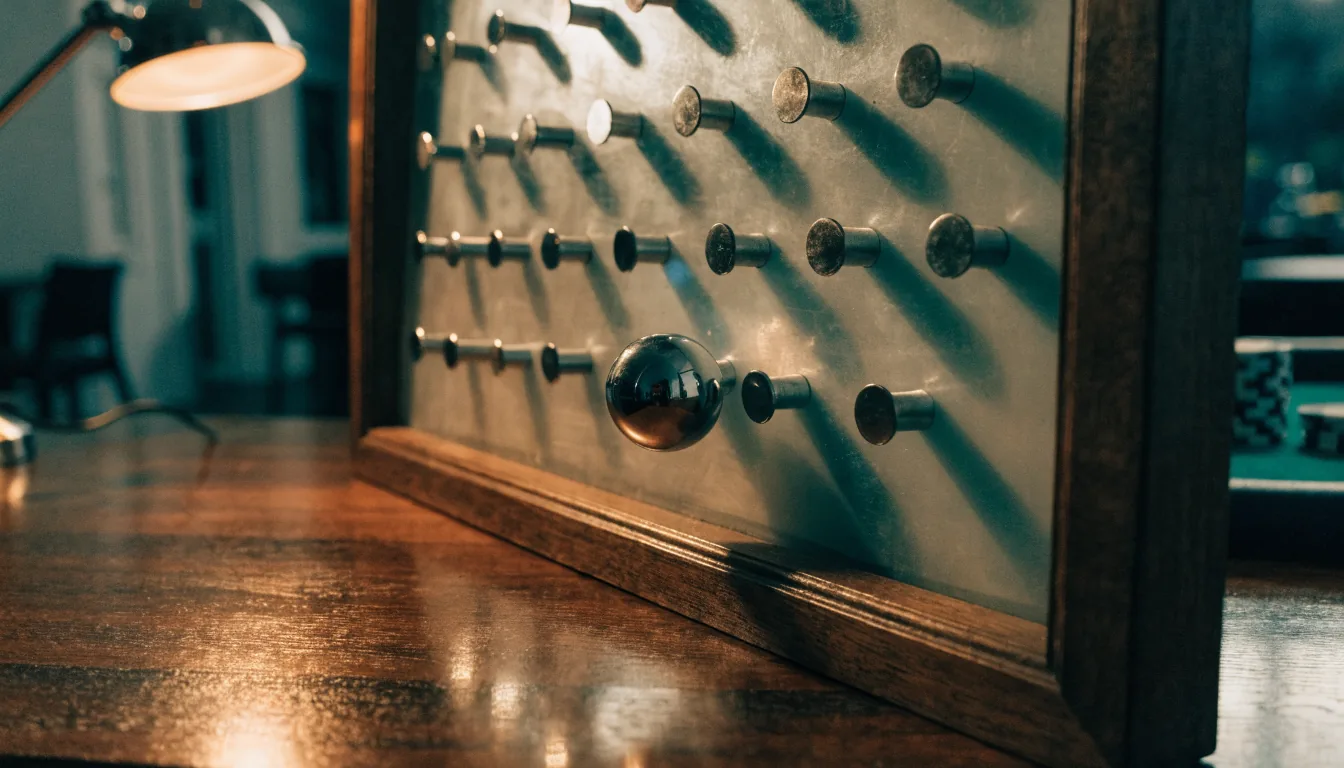
Table of Contents
- How Plinko Slots Translate the Board into a Slot Format
- Plinko Online Casinos: Access, Providers, and Verification
- Plinko for Real Money in Australia: Deposits, Bonuses, and Withdrawals
- Casino Plinko Games and the Dice-Based Formats Behind Them
- Plinko Casinos for Australian Players: Licensing and Operator Risk
- What Plinko Casino Reviews Can Establish—and What They Cannot
- Plinko Casino Australia in 2026: The Regulatory Position
- Free Play and Demo Modes for Plinko Casino Games
- Crypto Plinko Casinos and the Limits of Script-Based Claims
- Lucky Plinko, Casino Guru, and UK-Focused References
How Plinko Slots Translate the Board into a Slot Format
A Plinko slot borrows the visual language of a pegboard but presents the result through a slot-style interface. Instead of treating the board as a complete standalone game, the design frames each drop as part of a wider package of reels, symbols, paylines, bonus panels, or spin controls. The distinction matters because the word “Plinko” can describe either a board-based gambling mechanic or a slot title that uses the board as its central image.
In a standalone Plinko game, the primary event is the descent of a ball through pins toward a set of outcome positions. The interface is therefore organised around the board: the starting point, the route, and the final landing area receive most of the visual emphasis. A Plinko slot may retain that descent, but it places the event inside a conventional slot environment. The player may see reels beside the board, symbols above it, or a spin button that initiates the full sequence. The board becomes one component of the presentation rather than the entire game structure.
What “Plinko slot” means in practice
The label Plinko Slot is not a technical category with one mandatory layout. It is a product description used for titles that combine a Plinko-like drop with slot conventions. One game may show a ball falling through pegs after every spin. Another may use the board only during a bonus feature while the base game relies on reels. A third may imitate the appearance of a slot machine while removing traditional reels almost entirely.
This variation explains why searches for a Plinko slot machine can produce different kinds of products. A physical-looking cabinet may display a digital board, spinning symbols, and familiar slot controls. A browser-based title may reproduce the same cabinet metaphor without representing an actual land-based machine. The phrase “slot machine” therefore describes the interface and product format, not necessarily a physical device.

A Plinko slots game may also use standard slot terminology even when its most recognisable action is a ball drop. Terms such as spin, scatter, wild, bonus round, multiplier, and paytable indicate that the title has been designed for the slot market. Those terms should not be treated as proof that every Plinko title has reels or paylines. They identify the conventions surrounding the game, while the individual rules remain title-specific.
Reels, symbols, and the board
The main design problem is how to make a random path through pegs fit a reel-based structure. Developers can solve it in several ways:
- Reels trigger the board. A spin determines whether the Plinko sequence begins, and the board then supplies the feature result.
- The board replaces the reels. The title keeps slot controls and a paytable but presents the ball’s route as the central outcome mechanism.
- The two systems operate together. Reel symbols determine a modifier, while the ball lands in a position associated with a prize or multiplier.
- The board functions as a bonus stage. Regular spins use a conventional layout, with Plinko appearing only after a qualifying combination.
These structures produce different experiences even when the titles share the same name. Consequently, a Plinko slots review needs to identify the actual sequence of play rather than relying on the artwork. A screenshot showing pegs and coloured slots does not establish whether the title contains reels, a bonus feature, or a board-only mechanic.
The paytable is especially important. In a conventional slot, a paytable explains symbol values, winning combinations, and special symbols. In a board-led design, it may instead explain landing positions, multipliers, or conditions for entering a feature. If both systems are present, the paytable should distinguish their roles. Without that separation, the visual similarity between a slot interface and a standalone Plinko board can make the rules difficult to interpret.

Gods of Plinko and themed variations
Gods of Plinko illustrates how the format can be wrapped in a strong theme. A title with a mythological or temple setting may use statues, columns, divine characters, and ornamental symbols around the board. The thematic layer changes the presentation but does not, by itself, determine the underlying mechanic. The game could be reel-led, board-led, or a hybrid.
The phrase Gods of Plinko slot should therefore be read as a title reference rather than a guarantee of a particular ruleset. A review or product description should establish whether the gods act as wilds, trigger symbols, visual decoration, or feature markers. Similar caution applies to names such as Slot Temple Plinko. “Temple” may describe the setting, while “Plinko” identifies the central visual or mathematical idea; neither word alone explains the paytable.
Other names, including Plinko Rush Slots, may suggest faster pacing or a feature-oriented design. Such wording is promotional and descriptive, not evidence of a specific volatility level, return rate, or bonus structure. Those characteristics require documented game information. No numerical performance claim can be inferred from the title.
Market Australia
Language English
Game Category Plinko Slots / Board-based
Demo presentation and review standards
A Plinko slots demo can be useful for examining interface behaviour without treating the experience as evidence about real-money performance. The demo can show how spins start, how the ball enters the board, where rules are displayed, and whether the slot layer is separate from the Plinko layer. It cannot, without further documentation, establish the mathematical model or the reliability of a real-money offering.
The same principle applies to a Plinko casino slot machine presented through a mobile or desktop interface. Visual polish, animation speed, and the presence of a familiar spin button are presentation features. They do not demonstrate fairness. A review should distinguish observed interface elements from claims about randomisation.
Where a title uses a certified random number generator, the relevant claim concerns the mechanism identified by the operator or provider. Betway, LeoVegas, Casumo, and 888 Casino are described as using certified random number generators, with testing attributed in a source to independent laboratories such as eCOGRA or iTech Labs. That statement concerns the named operators and the cited source; it should not be generalised to every Plinko slot.

A separate source describes BGaming dice games as using SHA-256 hashing so that each roll can be checked independently. This is a property attributed to those dice games, not automatically to slot titles that borrow Plinko imagery. A board-shaped interface, a slot cabinet design, and cryptographic verification are separate matters.
The result is a category with overlapping vocabulary but no single universal format. “Plinko slot” may refer to reels with a Plinko bonus, a board presented with slot controls, or a hybrid design. Identifying the actual interface, paytable, and documented randomisation method is more reliable than judging the product by its title or theme.
Plinko Online Casinos: Access, Providers, and Verification
A Plinko online casino is not a separate category of gambling licence. It is an online casino interface that makes a Plinko-style game available alongside other products. The distinction matters because the visible game is only one part of the service. Access depends on the operator, its jurisdiction, the software supplier, account controls, and the evidence available for checking game integrity.
Legal Risk Accessing offshore operators carries a real risk of disruption or loss of access due to ACMA blocking in Australia.
For Australian players, offshore operators commonly use licensing jurisdictions such as Curaçao, Malta, or Gibraltar. That licence does not convert an online casino into an Australian-licensed service. The Australian Communications and Media Authority (ACMA) actively blocks offshore operators, and access to an unlicensed site therefore carries a real risk of disruption or loss of access. The platform’s appearance, Australian currency display, or local payment branding does not establish domestic authorisation.
How Plinko appears inside an online casino
An online casino with Plinko normally presents the game through a central lobby rather than as an isolated website. The lobby may group products by type, provider, popularity, or recent activity. A Plinko casino game online can therefore appear beside slots, table games, live-dealer tables, and Crash games without sharing the same technical model.
The interface often includes:
- a game tile with the title and provider;
- a launch screen embedded in the casino website or mobile interface;
- stake controls and an outcome display;
- account, balance, and transaction panels managed by the operator;
- responsible-gambling and verification links placed outside the game window.
This structure explains why phrases such as “what online casino has Plinko” do not have one stable answer. Availability can depend on the operator’s supplier agreements, the player’s jurisdiction, the account’s verification status, and whether the game remains in the current lobby. A title visible in one casino may not be offered by another, even when both use the same general casino platform.
“Golden Plinko casino” may refer to a branded title, a search label, or a casino page using the word Golden in its presentation. The name alone does not identify the operator, the provider, or the regulatory status. Those details have to be established separately from the game’s title.
Providers and game presentation
The provider supplies the game software, while the casino operates the account environment in which the game is displayed. These roles should not be treated as interchangeable. A casino may host products from several providers, and the presence of a recognised provider does not by itself verify the operator serving the Australian market.
Some Plinko-style products may be presented as ordinary instant games, while others may be grouped with dice products or Crash games. The classification affects navigation and, in some cases, the information shown about the game. The label “Plinko live casino” also requires careful interpretation. A live-casino product normally involves streamed human dealing, whereas a software-based Plinko game may simply display animated board movement. A live visual presentation is not proof that a human dealer determines the result.
Game verification therefore needs two separate checks:
- Operator verification: the casino’s legal entity, licence jurisdiction, licence number, and account terms.
- Game verification: the provider, randomisation method, testing evidence, and accessible game history.
A platform can provide a polished interface while leaving one or both areas unclear. Conversely, a verifiable game mechanism does not make an unlicensed operator suitable.
Randomness and independent checking
Betway, LeoVegas, Casumo, and 888 Casino are described as using certified random number generators. A profile review reports that the relevant RNG testing is performed by independent laboratories such as eCOGRA or iTech Labs. Such a statement is useful only when it can be connected to the specific casino, game, and current certification evidence. A general claim about a brand does not automatically cover every Plinko product displayed in its lobby.
BGaming dice games are described in a profile review as using SHA-256 hashing, allowing each roll to be checked independently. This is a technical feature of the referenced BGaming products, not a universal property of every Plinko casino game. Hashing can support independent verification when the necessary values and instructions are made available; it does not replace checks on licensing, account rules, or operator identity.
For any online Plinko casino game, the relevant evidence should be visible rather than implied. Useful documentation includes the provider’s name, the applicable testing statement, the rules governing the result, and a game-history record that corresponds to the account activity. If a platform uses provably fair terminology, the verification process should explain how the result is reconstructed. A slogan without the underlying values or method establishes little.
Verification before access
The first verification step concerns the operator, not the game title. The licence number should be checked on the regulator’s official website. Curaçao and Malta licensing authorities maintain public registers where a licence number and its status can be checked; a claimed jurisdiction is not sufficient on its own. Gibraltar may also appear in offshore licensing arrangements, but the operator’s actual licence details still require confirmation.
The second step is consistency. The legal entity named in the licence information should correspond with the casino’s terms, privacy policy, payment conditions, and customer-support details. Differences between the brand name and the licensed entity are not automatically improper, but they should be explained clearly.
The third step is technical and contractual. The casino should identify the provider, describe the game’s randomisation or verification method, and make account and game records available. Unclear ownership, missing licence information, or unsupported fairness claims are material gaps, even when the Plinko interface operates smoothly.
Thus, online access is not established merely because a Plinko casino loads in Australia. A credible assessment separates the platform from the game, the provider from the operator, and technical verification from legal authorisation. That separation is essential when evaluating an online casino Plinko real-money environment without treating presentation as proof.
- Check the operator’s licence number on the official regulator’s website.
- Verify the provider and the randomisation method used.
- Review the specific terms for bonus wagering contributions.
- Assume a brand name implies a domestic Australian licence.
- Treat a demo mode as evidence of real-money performance.
- Rely on a visual interface as proof of fairness or legality.
Plinko for Real Money in Australia: Deposits, Bonuses, and Withdrawals
Playing a Plinko casino game for real money in Australia involves two separate questions: whether the transaction is lawful for the player, and what financial terms the offshore operator applies. The Interactive Gambling Act 2001 restricts Australian-based providers from offering online casino games, including dice games, to Australian residents. It does not make the Australian player’s offshore wager a criminal offence. As a result, real-money Plinko-style play may be available through an international operator, but it is not the same as using a domestically licensed online casino.
The legal setting for real-money play
No Australian casino licence exists for online casino games. Operators serving Australian customers from outside the country commonly rely on licensing jurisdictions such as Curaçao, Malta, or Gibraltar. That licence belongs to the offshore operator and does not convert the service into an Australian-regulated casino product.
The distinction matters when money is deposited. The Australian Communications and Media Authority actively blocks offshore gambling sites, and access may therefore change even after an account has been opened. An unlicensed site presents a separate risk because there may be no credible licensing framework behind its account rules, payment processing, or dispute procedures. The financial decision is consequently not limited to the advertised game or bonus. It also includes the possibility that the operator becomes inaccessible or that a withdrawal dispute is difficult to resolve.
A Plinko casino game real money account should therefore be assessed through its terms before any payment is made. The relevant questions concern the operator’s stated licence, the identity checks applied to withdrawals, the accepted payment methods, and the conditions attached to promotional funds. These are transaction conditions, not features of the Plinko board itself.
Deposits and payment costs
The minimum deposit shown on a casino page is not necessarily the total cost of funding an account. A platform may advertise a minimum deposit of AU$10 while applying a 5% surcharge to certain payment methods. This example comes from a single specialist review, so it should be treated as a platform-specific finding rather than a market-wide rule. The payment page and its fee schedule remain more relevant than the headline minimum.
The same distinction applies to the choice between cards, bank transfers, electronic wallets, and cryptocurrency. A payment method can be available without being cost-free, and a deposit can be accepted without guaranteeing that the same route will support withdrawals. The phrase “Plinko casino game crypto” therefore describes a payment route, not evidence that the game is fair, the casino is licensed, or the transaction is reversible. Crypto funding can also introduce exchange-rate and transfer considerations that are separate from the game balance.

An app or downloadable client does not alter these financial conditions. Whether Plinko is opened in a browser, through a mobile app, or through a casino game download, the account remains subject to the operator’s deposit rules and verification procedures. The same applies to Plinko slots played for real money: a slot-style interface does not create a different legal or payment category.
Bonuses and wagering contribution
A no-deposit promotion should not be treated as cash available for unrestricted Plinko play. Bonus funds may carry a wagering requirement, a maximum cashout condition, an expiry rule, or restrictions on which games count. The key issue for dice-based or Plinko-style products is the contribution percentage.
Some operators count only 10% of dice bets toward wagering requirements. Other published terms state that dice games may contribute 20% or less. These figures do not establish a universal rule; they demonstrate why a bonus must be evaluated through its product-specific terms. A promotion can appear generous while requiring substantially more qualifying play than a reader might infer from the headline offer.
Verification Checklist
- Verify the operator’s licence jurisdiction and number.
- Confirm the game provider and testing evidence.
- Check the specific wagering requirements for bonuses.
- Review any potential deposit or withdrawal surcharges.
The position can be stricter for games described as Plinko, crash, dice, or casino slots. The label used in the interface may not determine the bonus classification. The operator’s terms may place the game in a restricted category or assign it a reduced contribution rate. A player considering a Plinko 2.0 casino real-money offer therefore needs to confirm whether the exact title contributes at all, rather than assuming that every wager advances the promotion.
A “real money no deposit bonus” also requires careful separation between cash balance and bonus balance. The absence of a deposit does not remove verification, wagering, or withdrawal conditions. If the terms do not clearly state how the Plinko game is treated, the promotion cannot be valued reliably.
Withdrawals and the balance that can be cashed out
A withdrawal request can trigger identity verification even when the deposit was processed without additional checks. The relevant conditions may include proof of identity, confirmation of payment ownership, and compliance with the operator’s account rules. The existence of a withdrawal button is not evidence that every balance is immediately withdrawable.
Costs must also be distinguished from wagering conditions. A fee may apply to the payment route, the withdrawal amount, or both. The isolated example of a 5% payment surcharge shows why the deposit screen should be read alongside the cashier’s withdrawal information. A Plinko casino game real-money withdrawal is a separate transaction with its own possible charges and processing restrictions.
The most defensible comparison is therefore based on documented terms: whether Plinko qualifies for the bonus, what percentage of wagers counts, which payment methods support withdrawals, and whether fees are disclosed before confirmation. Free play avoids the immediate deposit and withdrawal question, but it should not be confused with a cashable balance. For real-money play, the financial outcome depends at least as much on these contractual conditions as on where the Plinko ball lands.
Casino Plinko Games and the Dice-Based Formats Behind Them
Plinko belongs to a wider group of casino games built around chance, visible progression, and a discrete final outcome. Its defining image is a ball moving through staggered pegs before reaching a lower slot. That structure separates a Plinko casino game from conventional dice products, even when both are presented through a compact, fast interface.
Where Plinko Fits
A casino Plinko game is generally understood through its visual path rather than through numbered dice, card ranks, or a dealer-led table. The player selects a stake and, depending on the title, may choose a risk setting or a target pattern before the ball is released. The result is determined by the landing position and the multiplier assigned to it.
This makes Plinko closer in presentation to a probability-based arcade game than to a traditional table game. The board supplies the visible narrative: the ball falls, changes direction, and settles into an outcome. The interface can therefore resemble a game Plinko casino product even when the underlying mathematics is generated digitally rather than by a physical board.
Focuses on a ball’s descent through a staggered pegboard to reach multipliers.
Based on dice rolls, combinations, or comparisons between outcomes.
Centers on a rising multiplier where the player must decide when to cash out.
The category also overlaps with crash games in its emphasis on short rounds and multiplier-based results. The distinction is structural. A crash game develops around a rising multiplier and a cash-out decision, whereas Plinko resolves through the ball’s route and landing position. These are different forms of game logic, despite their similar pace.
Dice-Based Casino Formats
Dice games use a different vocabulary and a different set of outcome structures:
- Craps is a table game based on dice rolls, defined by combinations, point phases, and multiple betting areas.
- Dice Duel frames the result as a comparison between dice outcomes, making the contest between sides central to the interface.
- InOut uses a dice-based betting structure in which the selected outcome category determines the result.
- Sic Bo is a traditional dice game built around combinations and totals from several dice.
- Lightning Dice combines a dice roll with randomly selected number multipliers, creating a format closer to a live or game-show presentation.
None of these is a ball-path game. Their visual surfaces may be modernised for online play, but the mathematical event remains a dice result or a combination derived from dice. Plinko, by contrast, represents probability through a route across the board.
Bonuses and Game Classification
The distinction matters when bonus terms classify eligible games. A source-specific industry review reports that one operator counts only 10% of dice bets toward wagering requirements, while another stated rule set allows dice games to contribute 20% or less. Those figures describe particular terms, not a universal market rule. They also demonstrate why a Plinko title should not automatically be treated as a dice game merely because it is quick and multiplier-based.
The relevant classification must be taken from the operator’s bonus wording and the game’s actual rules. A Plinko casino game may be placed under arcade, instant, table, or dice categories, depending on the platform. Without that classification, the contribution rate cannot be inferred from the title alone.
Verification Across Formats
Verification methods also differ. A specialist review reports that BGaming dice games use SHA-256 hashing, allowing each roll to be checked independently. A separate specialist review states that selected real-money crash games use provably fair technology, with a server seed supplied after the round for cryptographic verification. These mechanisms can support outcome checking, but they do not establish that every Plinko title or every dice product uses the same system.
A demo can also change the nature of the comparison. A specialist casino review reports that Casumo offers a dice demo mode without requiring a deposit. Such a mode demonstrates the interface and round structure, but it does not establish real-money eligibility, bonus treatment, or withdrawal conditions.
The term “Plinko games casino” therefore covers a presentation category rather than one uniform mathematical product. The board-based ball game, traditional dice tables, comparison dice formats, and crash games may share speed and multiplier language, while remaining distinct in mechanics, classification, and verification.
Plinko Casinos for Australian Players: Licensing and Operator Risk
For Australian players, a casino offering Plinko is generally an offshore service rather than a domestic gambling business. Australian law does not provide a local casino licence for online casino games, and the Interactive Gambling Act 2001 restricts providers from offering services such as roulette, blackjack, pokies and live-dealer tables to Australian customers. The Act targets the provider, not the individual player. Consequently, access to an offshore Plinko game does not mean that the operator is licensed in Australia.
What an offshore licence establishes
International operators serving Australian customers commonly rely on licensing jurisdictions such as Curaçao, Malta or Gibraltar. A licence from one of these jurisdictions may establish that the operator falls within a foreign regulatory framework. It does not create Australian approval, remove the possibility of access restrictions, or guarantee that every claim made by a casino is accurate.
The relevant licence should be identified by number and checked on the regulator’s official website. MGA and Curaçao licensing authorities maintain public registers where a licence number and its status can be checked. The same principle applies to casinos presenting themselves as having a licence from another recognised jurisdiction: the claim should be traceable to the relevant authority rather than accepted from a logo or a banner.
This distinction matters across different forms of Plinko branding. A site may describe itself as a casino with Plinko, a Plinko ball casino, or a crypto casino offering the game. Those labels describe a product or payment presentation, not regulatory status. A casino using cryptocurrency is still an operator, and the operator remains the party whose licence, ownership information and terms require examination.
Summary
- There is no domestic Australian licence for online casino games.
- Offshore operators are subject to ACMA blocking and regulatory risks.
- Game mechanics and bonus contributions vary significantly between providers.
- Verification requires checking both the operator’s licence and the game’s technical fairness.
ACMA blocking and operator exposure
The Australian Communications and Media Authority actively blocks offshore operators. Blocking action can affect a casino’s website or access route, even where the operator previously accepted Australian registrations. It also demonstrates why availability should not be treated as evidence of authorisation. A functioning page, a prominent Plinko game, or a reference to Gods of Plinko does not establish that the service is permitted to operate for Australians.
Unlicensed sites present a separate risk from ordinary game volatility. The regulatory position may be unclear, ownership details may be difficult to verify, and account policies may change without a reliable domestic enforcement route. A site can also use familiar terminology such as Bitcoin Plinko casinos or Plinko game online casinos while providing insufficient evidence of its corporate identity or licence.
Terms relating to dormant accounts illustrate the need for document-level checking. A profile review reported one operator charging AU$10 per month after the first three months of inactivity. That is a finding about the reviewed operator, not a market-wide rule. It shows why the licence check should be accompanied by examination of account, withdrawal and inactivity clauses before any deposit is made.
For Australian users, the central question is therefore not simply what is Plinko casino, but who operates the service, under which foreign authority, and whether that authority’s register confirms the stated licence. An unlicensed operator carries materially greater regulatory and contractual risk, regardless of whether the game is branded as Plinko, a crypto product, or a conventional casino offering.
What Plinko Casino Reviews Can Establish—and What They Cannot
A useful Plinko casino review should distinguish documented conditions from marketing language. The title of a review—whether it concerns Plinko Rush, Plinko Verde, Plinko Deluxe, or a free-play version—does not establish that the game is fair, available in Australia, or suitable for real-money use. Those conclusions require separate evidence.
What a review can document
A review can record the operator’s stated licence details, provided the licence number is checked against the relevant regulator’s website. It can also identify the game provider, the published theoretical RTP where available, and whether the casino displays bet-by-bet game history. These are stronger indicators than claims such as “trusted,” “premium,” or “best Plinko casino.”
Bonus terms require particular care. The review should state whether Plinko or related dice games contribute to wagering requirements, and at what percentage. A bonus that appears generous may have limited practical value if the relevant games are excluded or assigned a low contribution rate. The full terms, maximum cashout provisions, payment restrictions, and expiry conditions should be assessed together rather than reduced to the headline offer.
Fees and account policies are equally material. A platform reviewed by a specialist gambling review charged AU$5 on all bank-transfer withdrawals. Another reviewed platform charged AU$3 for withdrawals under AU$100. These are platform-specific findings, not general market rules. A review should also check inactivity provisions: some casinos charge fees after 90 days without login activity. The applicable trigger, amount, and method of deduction must come from the operator’s terms.
Is Plinko legal in Australia?
Australian players may access offshore operators, but no domestic Australian casino licence exists for online casino games.
How can I verify a game’s fairness?
Check the provider’s name, the randomisation method, and look for testing evidence from independent laboratories like eCOGRA.
Do all Plinko games work the same way?
No, they vary between reel-led, board-led, or hybrid structures, and their contribution to bonuses differs by operator.
What a review cannot prove
A positive review cannot prove that a brand is authorised to offer online casino games to Australians. No Australian casino licence exists for that product, and offshore availability does not remove the need to examine licensing and blocking risks. Nor does a review establish that a name such as MrBeast Casino Plinko is connected with a legitimate operator merely because it appears in promotional material.
Likewise, “provably fair,” a claimed random-number-generator certification, or a reference to a named provider is not conclusive without accessible verification. Promotional pages may describe a game as free, fair, or deluxe without showing the underlying rules, game history, or applicable account conditions.
The evidential standard is therefore limited: a review can report verifiable terms, observed interfaces, and documented policies. It cannot convert advertising into proof, infer Australian suitability from branding, or guarantee future fees, bonuses, withdrawals, or continued availability.
Plinko Casino Australia in 2026: The Regulatory Position
This shortlist highlights casino operators worth reviewing for Australian players exploring Plinko casino options in 2026. Use each verdict to quickly assess the available bonus, licensing, deposit, wagering, and payout details.
Bonus: up to A$6,600 + up to 250 free spins across 4 deposits DragonSlots Casino stands out for a deposit-based welcome package offering up to A$6,600 and up to 250 free spins across four deposits.
License: Curacao eGaming Licence · Min. deposit: A$10 Rainbet is notable for operating under a Curacao eGaming Licence and accepting minimum deposits from A$10.
License: Curacao eGaming (Hollycorn N.V., since 2017) · Bonus: 225% up to A$1,540 + 600 free spins across 4 deposits, 20x wagering · Min. deposit: A$20-30 (depends on the offer) Playfina Casino operates under Curacao eGaming through Hollycorn N.V. and has done so since 2017. Its offer includes 225% up to A$1,540, 600 free spins across four deposits, and 20x wagering, with a minimum deposit of A$20–30 depending on the offer.
License: Curacao (operating since 2017) · Bonus: 250% up to A$2,000 + 50 free spins on the first of six deposits · Min. deposit: A$20 Uptown Pokies has operated under a Curacao licence since 2017. Its promotion offers 250% up to A$2,000 plus 50 free spins on the first of six deposits, with a A$20 minimum deposit.
License: Curacao Gaming Control Board OGL/2023/176/0095 (Hollycorn N.V.) · Bonus: up to A$11,000 + 300 free spins (code NEO100) Neospin operates under Curacao Gaming Control Board licence OGL/2023/176/0095 through Hollycorn N.V. Its NEO100 promotion offers up to A$11,000 and 300 free spins.
License: Curacao eGaming Licence · Min. deposit: A$10 Rocket Play is notable for its Curacao eGaming Licence and a minimum deposit of A$10.
License: Curacao eGaming (Roby Games Ltd) · Bonus: 100% up to A$750 + 200 free spins Roby Casino operates under Curacao eGaming through Roby Games Ltd. Its welcome offer includes 100% up to A$750 plus 200 free spins.
Bonus: up to A$7,500 + 550 free spins across 10 deposits, 50x wagering · Payout speed: crypto under 1 hour, PayID 1-3 business days · Min. deposit: A$20 (A$30 to qualify for the bonus) Ricky Casino offers up to A$7,500 and 550 free spins across 10 deposits, with 50x wagering. Crypto payouts are stated as taking under one hour, while PayID payouts take 1–3 business days; the minimum deposit is A$20, or A$30 to qualify for the bonus.
License: Curacao · Bonus: 100% up to A$500 + 200 free spins, 10x wagering · Payout speed: crypto 30-60 minutes, fiat 1-5 days · Min. deposit: A$10 Wild Tokyo operates under a Curacao licence and offers 100% up to A$500 plus 200 free spins with 10x wagering. The minimum deposit is A$10, while stated payout times are 30–60 minutes for crypto and 1–5 days for fiat.
License: Curacao Gaming Control Board · Bonus: up to A$5,000 + 400 free spins JustCasino operates under a Curacao Gaming Control Board licence. Its promotion offers up to A$5,000 and 400 free spins.
The legal position for a Plinko casino in Australia in 2026 depends on the operator’s location and the type of service being offered. The central distinction is between Australian-based providers and offshore websites accessible from Australia. The Interactive Gambling Act 2001 restricts Australian-based operators from offering online casino games, including dice games, to Australian residents. A casino Plinko product offered by a domestic business therefore does not sit within a lawful Australian online-casino licensing market.
This restriction covers online casino services such as real-money games supplied to Australian customers. It is not limited to traditional table games. A Plinko product can be presented as an arcade-style game, a dice-based game, or a casino title, but its classification cannot be determined by branding alone. The relevant question is whether the service is an online gambling product offered to an Australian customer.
Australian players are not committing a crime merely by placing real-money bets with an international offshore operator. Offshore websites may therefore offer Plinko and other casino games to Australian residents, even though no domestically licensed real-money online casino exists for this market. That distinction explains why a search for Plinko casino Australia 2026 can produce offshore options rather than Australian-licensed casino operators.

Accessibility does not establish official approval. The ACMA actively blocks offshore operators, and playing at an unlicensed site carries real risk. A website may remain reachable for a period and still be exposed to blocking or other enforcement action. Its availability should not be interpreted as evidence that the service is authorised in Australia.
The resulting position is limited and specific:
- Australian-based operators cannot lawfully offer online casino games, including Plinko-style casino products, to Australian residents.
- Australian residents may access real-money casino games through international offshore operators.
- No Australian casino licence authorises an online casino product for this purpose.
- Offshore availability does not remove the risks associated with unlicensed sites or ACMA blocking.
Accordingly, “Plinko casino Australia” describes an access and jurisdiction question, not a domestic licensing category. The 2026 position remains one in which the product may be offered offshore, while Australian law restricts local providers from supplying it.
Free Play and Demo Modes for Plinko Casino Games
Free-play versions of Plinko-style games serve a different purpose from real-money gambling. They allow the interface, drop path, sound design, and payout presentation to be examined without treating the session as a cash game. A result shown in a demo does not create a withdrawal balance, and practice play should not be described as a route to free spins or guaranteed winnings.
What Demo Play Can Show
A free Plinko session may demonstrate how a ball moves through pegs, how stake and payout fields are displayed, and whether the game uses a slot-style interface or a standalone board. Similar testing can apply to a Plinko slot free-play version or to a title presented under a themed name such as Pond of Plinko. The name alone does not establish that the game is an official slot, that it has a particular return profile, or that it is available to Australian players.
Demo access also helps separate game content from casino conditions. A player can inspect menus and basic controls without treating promotional language about free spins as evidence that bonus spins are available. Any claim about free spins must be checked against the operator’s actual terms; a demo mode is not itself a bonus.
Provably Fair A technical mechanism, often using cryptographic hashing, that allows players to independently verify the randomness and integrity of a game outcome.
A profile review reports that Casumo offers a dice demo mode without requiring a deposit. This is a documented feature of that reviewed platform, not evidence that every Plinko or dice title can be tested without an account or deposit. Availability may also differ between the casino interface and an individual game.
Limits of Free Play
The phrase “best Plinko casino games sites” has little meaning when based only on demo access. A free mode does not establish licensing, game certification, account-policy quality, or the treatment of real-money transactions. Those are separate matters and cannot be inferred from a practice screen.
Likewise, a demo outcome should not be used to predict real-money results. Practice play can explain the rules and interface, but it does not remove volatility or convert a gambling product into a risk-free activity. A defined session budget remains relevant when play moves from demonstration to real money, and losses should not be chased.
Crypto Plinko Casinos and the Limits of Script-Based Claims
A crypto Plinko casino is defined by its payment method, not by a separate standard of fairness. Cryptocurrency may change how funds are transferred, but it does not establish that the game is licensed, independently tested, or operated transparently. The same distinction applies when a site presents itself as a crypto casino Plinko platform: the label describes the transaction environment, while the game’s integrity depends on its technical documentation and the operator’s policies.
The phrase “Plinko casino script” can refer to software used to reproduce a Plinko-style interface or to the underlying game logic supplied to an operator. A script can display pegs, multipliers, and an animated ball without proving that the resulting distribution is random. Visual presentation is therefore weak evidence. The relevant questions are whether the outcome-generation method is explained, whether the game history is available, and whether published claims can be checked independently.
A documented provably fair system may use cryptographic commitments and later disclose information required for verification. A specialist industry review reports that BGaming dice games use SHA-256 hashing, allowing each roll to be checked independently. The same type of review states that a server seed value is provided after each round, enabling cryptographic verification of outcomes. These statements concern the described dice products; they should not automatically be transferred to every Plinko game using similar terminology.

The distinction matters because a Plinko casino crypto payment option and a verifiable game mechanism are separate features. A site may accept cryptocurrency while offering no accessible seed, hash, audit information, or complete round history. Conversely, a technical fairness claim does not resolve questions about withdrawals, account restrictions, or the operator’s licence.
Operator verification remains necessary before any deposit. The payment asset, the script’s branding, and the presence of cryptographic language do not replace confirmation of the licence number through the relevant regulator’s website. Where server-seed verification is unavailable, claims of fairness remain promotional assertions rather than demonstrated properties of the game.
Lucky Plinko, Casino Guru, and UK-Focused References
Names such as Lucky Plinko and Casino Guru can appear alongside Plinko-related casino content, but they do not establish that a particular site is suitable for Australian players. Lucky Plinko may refer to a branded game, an operator reference, or a promotional page, depending on the context. The name alone does not identify the provider, licensing position, game rules, or withdrawal conditions.
Casino Guru is better treated as a reference point for review-style information than as proof of approval. A listing or rating cannot replace verification of the operator’s licence, applicable terms, game contribution rules, account restrictions, or payment conditions. It also does not convert an offshore casino into an Australian-licensed service. No domestically licensed real-money online casino exists for Australian players, and online casino games remain prohibited when offered by providers to Australian customers under the Interactive Gambling Act 2001.
UK-focused material requires the same separation. A page discussing Plinko casinos in the United Kingdom may describe a different regulatory environment, available operators, or market-specific terms. Those details should not be transferred to Australia without checking their jurisdictional relevance. A UK reference is therefore evidence about UK-facing content, not evidence of Australian availability or legal protection.
Specific promotional claims also require source control. A specialist review states that Ozwin Casino offered a dice-game match bonus with 200% matching, 25x wagering, a $2,000 maximum cashout, and the code DICEROLL valid until February 2027. The same type of review reports that Leon Casino offered a dice-game bonus with 30x wagering and a $1,500 maximum cashout. These are operator-specific, time-sensitive claims—not verified rankings or general Plinko standards.
Is it legal to play casino dice games for real money in Australia in 2026?
Yes, Australians can play real-money dice games through international offshore operators. However, Australian-based operators cannot legally offer online casino games to Australian residents, and the ACMA blocks some offshore sites.
What are the wagering requirements for dice bonuses?
Dice bets may count for only 10% or less toward wagering requirements. For example, Ozwin Casino offers a dice bonus with 25x wagering, while Leon Casino requires 30x wagering.
What is the minimum bet for dice games in AUD?
The available information does not specify a minimum bet for dice games in AUD.
Created by the ”Aussie Bet Rates” editorial team.